IT Doesn’t Need Humanists
A story about the clash between humanists and technocrats.
Our reptilian brain likes black-and-white concepts and revels in oppositions that repel each other like the two poles of a magnet. Examples of such oppositions include:
- conservative vs liberal
- left-wing vs right-wing
- extrovert vs introvert
- Democrat vs Republican
- humanist vs analytical mind
Often the scope of these concepts is blurred, shimmering with shades of gray, and their semantic value is uncertain. Still, they serve as signposts that allow us to quickly orient ourselves—who our interlocutors are, what views they hold, and in which direction the discussion will inevitably go.
Their function is somewhat similar to stereotypes—with one difference: stereotypes usually exist on their own, while the concepts listed above almost always exist in opposition to their presumed counterparts. In this post I will focus on the opposition between analytical minds and so-called humanists.
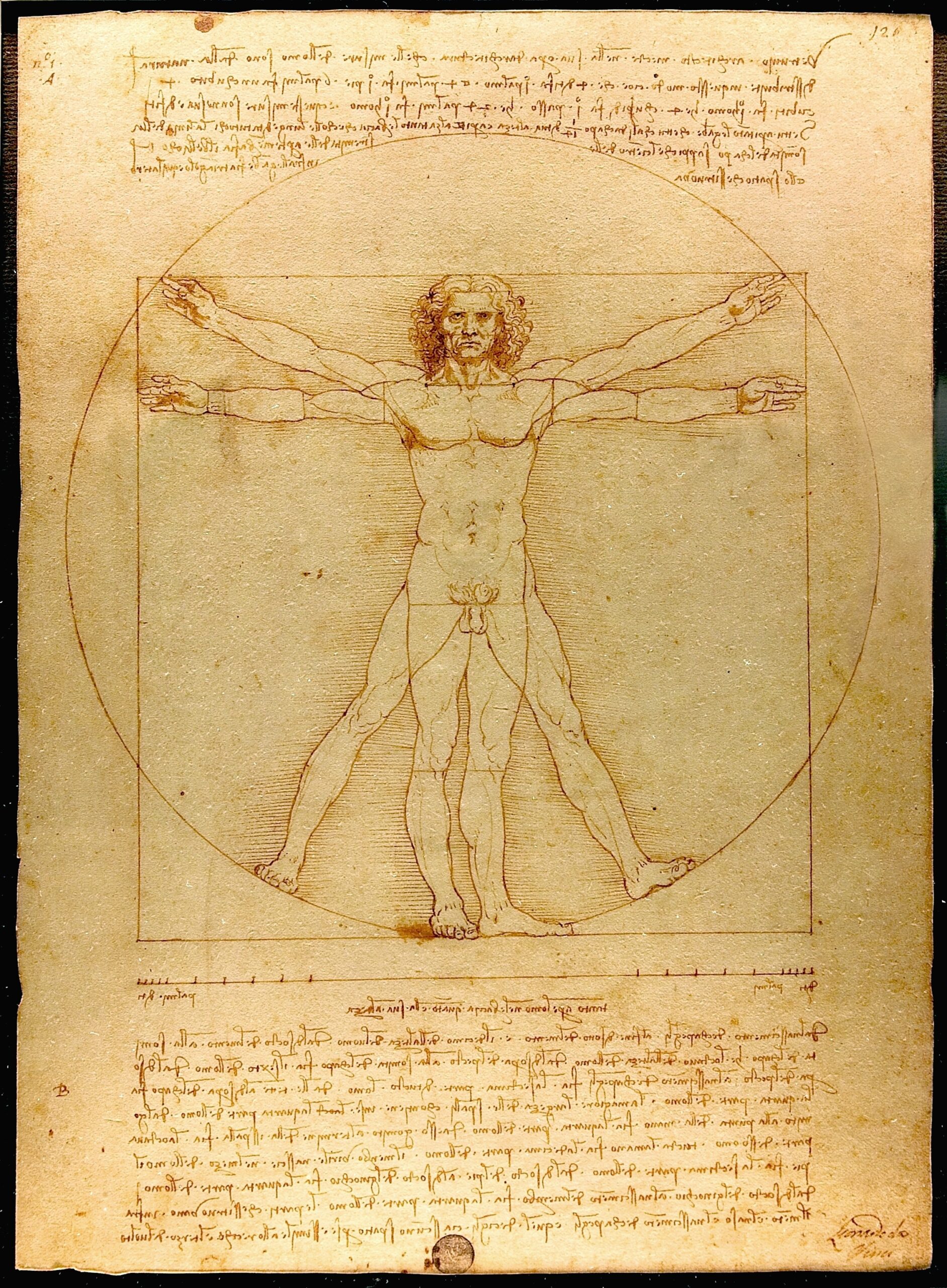 Leonardo da Vinci, Vitruvian Man, ca. 1490
Contrasting so-called analytical minds with humanists has a long tradition in the Polish education system. I mean, for example, high school classes with mathematical/scientific profiles versus humanities profiles. In the context of education this makes sense, because each of us has certain predispositions and talents, often visible from an early age. It’s worth creating the best possible conditions for their development.
Outside of school, however, this division is somewhat misguided, and in the context of the IT industry—I dare say—it makes little sense. Yet we often hear that there is a place in the industry for humanists, or even that the industry suffers from a shortage of them.
Seriously?
Alien vs Predator
Let me start with a digression. In the classic essay “The Two Cultures”, C. P. Snow pointed out the dismissive attitude of self-proclaimed intellectual humanists toward representatives of the sciences, portraying them as technocrats devoid of sensitivity to artistic and literary values—or even cultural refinement.
“You don’t read? Then I won’t sleep with you.” You probably recognize this condescending piece of nonsense often posted by so-called humanists on social media.
But notice that the opposite rarely happens. It does occur that humanists, buried in their reading dens, display ostentatious ignorance toward technology. Many of them don’t even know the basics of the sciences—not to mention their history, which they should supposedly be well-versed in.
Often you can also hear financial grievances mixed with resentment toward better-paid “science people”:
“I studied cultural studies and there’s no well-paid job for me. What’s wrong with this world?”
This argument—somewhat exaggerated here—has indeed crossed my ears coming from self-described humanists who didn’t quite manage to get their professional lives together. The tone is similar, for example, in this book.
But let’s note something important: humanist is essentially a self-diagnosis. It cannot be empirically disproven or verified.
A “science person” in the public imagination is someone with talent for numbers, engineering, or programming. Often—thanks to mass culture—such a person is imagined as someone on the neurodivergent spectrum, living in a basement and being bad at interpersonal relationships.
But who exactly is a humanist? Here are some possible answers.
A humanist:
- has read In Search of Lost Time out of a need for emotional experiences
- knows where to place commas
- regularly goes to the theater or the philharmonic
- can distinguish social gender from cultural gender
- is not good at mathematics
I’m afraid the last point is the key one. All the others are better interpreted as aspirations to belong to the so-called intellectual elite—whatever that phrase even means today.
And sure, I agree that something like cultural refinement exists. Roughly referring to the same cultural canon—literature, films, memes, places, songs, works of art, etc. Something like a shared code that allows for quick detection of whether the person we interact with has a similar background, has read as many books, has done as much work to become who they are.
It is easy to mistake this for a self-diagnosis of humanism.
Meanwhile, when such a self-proclaimed humanist morphs into a Scrum Master or Project Manager—because that’s the lowest entry barrier into the IT industry—they often justify their presence with the same old condescending rant. For example:
Maybe you (programmers) know how to use a given technology, but you don’t ask fundamental questions about it. You need humanists! Without them you can’t navigate the world and—oh no!—you’ll end up doing bad things.
How terrifying. LOL.
IT Only for Engineers?
I may have gone a bit hard on the humanists. Now I’ll soften the tone—especially since I’ll start with a confession.
I have a humanities education myself—and a very hardcore humanities one at that.
I’ve always tried not to use that fact as an excuse in my work, at least not when it comes to technological knowledge. And indeed, I’m constantly catching up on gaps and continuously learning new things. But who doesn’t?
Engineers or computer science graduates may start with greater contextual knowledge, often reinforced by their personal interests in certain domains. But they don’t necessarily have practical experience. After all, no one teaches at university how to write Terraform scripts for Azure or run AI-powered customer support.
Contextual knowledge certainly helps, but it does not exclude the possibility of people without a technical degree training themselves for a currently in-demand specialization in IT.
Especially in high-level areas such as front-end development, CRM systems, ERP systems, or other business software, which in practice often rely on the ability to operate software and sometimes high-level programming languages.
Let’s also add that:
- the profession of programmer is not regulated
- the IT industry contains many different knowledge domains requiring different competencies—including some stereotypically considered “humanistic”
- even good programmers who do solid work don’t know everything. A NodeJS developer doesn’t need knowledge of assembly language and CPU instructions, just like a network engineer doesn’t need to know CSS Flexbox.
And here, based on my own experience, I can point to some positive aspects of a humanities background in IT.
- the imperative to constantly improve—because I always have in the back of my mind that enthusiasts who have been coding since kindergarten won’t want to talk to me if they catch me making an obvious mistake
- technological FOMO—actively searching for information about new approaches, technologies, and solutions
- communicativeness, mainly the ability to speak and write clearly (though it’s hard to say how much of that comes from education versus personal predispositions)
- unconventional perspectives on technological problems and asking questions that IT natives often don’t ask
The rest is unfortunately just the result of personal work, interests, and—like in any job—luck: luck with people and circumstances.
Human After All
Returning to the thesis in the title.
People devoid of empathy and curiosity about the world exist both among technically oriented individuals and among humanists. I know philology graduates whose communication skills are poor, and engineering graduates whose vocabulary is almost equal to a dictionary and who casually use words like “cunctatory” or “to escamotage” in everyday communication (although that might be the result of reading Sapkowski).
For me, a humanist is not a self-diagnosis but a personality trait—something that could also be called curiosity about the world and a refusal to confine oneself to a narrow area of interests or competencies.
In that sense, Grace Hopper—whom I wrote about here among other places—is a humanist to me.
However, I think we should not overuse this word. Today it hardly refers to any concrete phenomenon—it’s just a label, verbal padding without a clear referent.
Therefore, I dare to claim that IT—like any technological industry—does not need humanists.
What it needs—very much so—are versatile people who are clever, logical thinkers who connect the dots quickly, communicate well, remain open to development, and are interested in technology and the world around them.
And if they have also read the entire cycle of Proust, completed a course in Old Church Slavonic, and know the basics of structural anthropology, it certainly won’t hurt them.